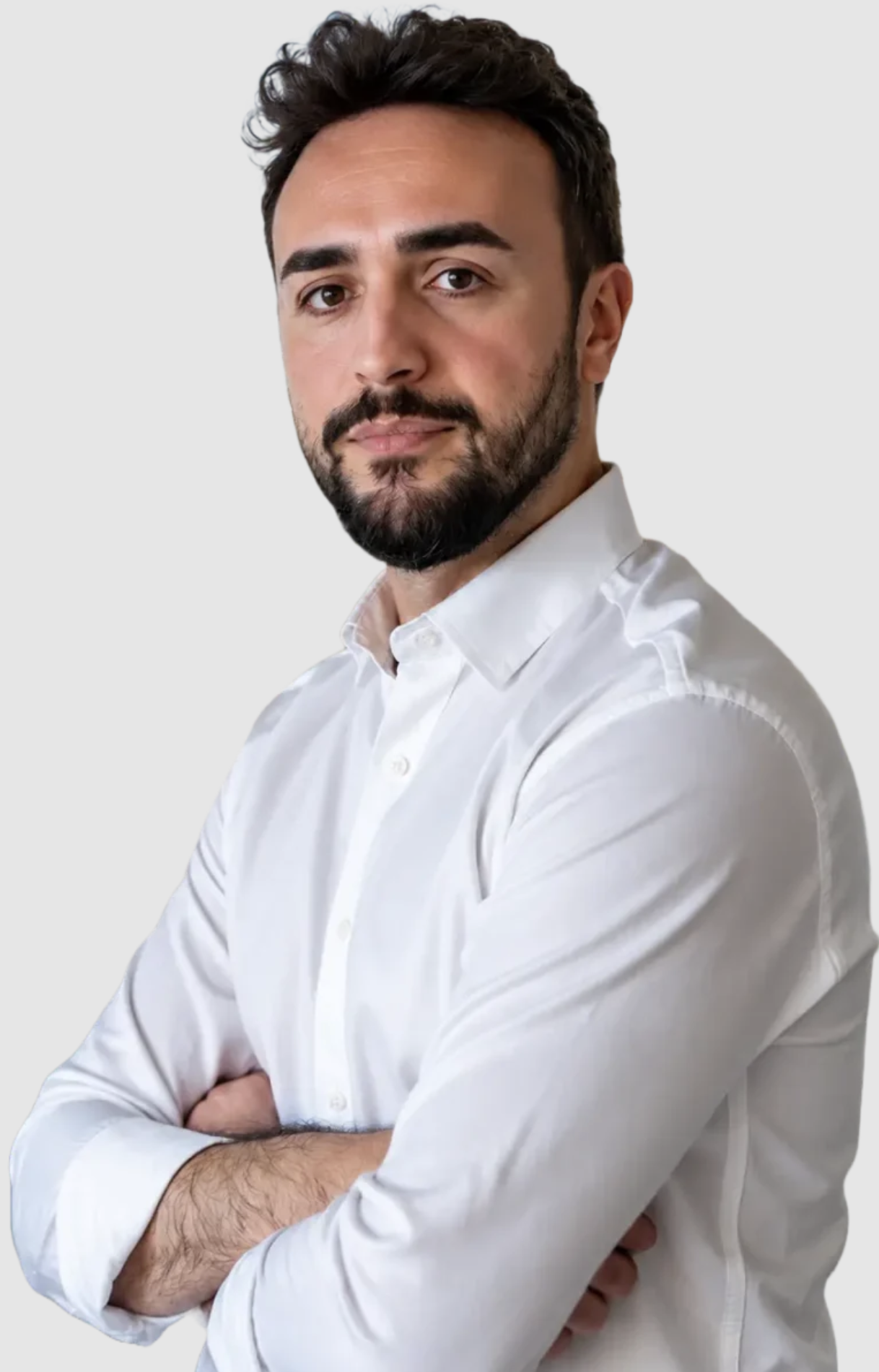
The Italian born digital entrepreneur on why the Mediterranean island became home, what running a remote-first media business actually looks like, and the slower rhythm that made it all work.
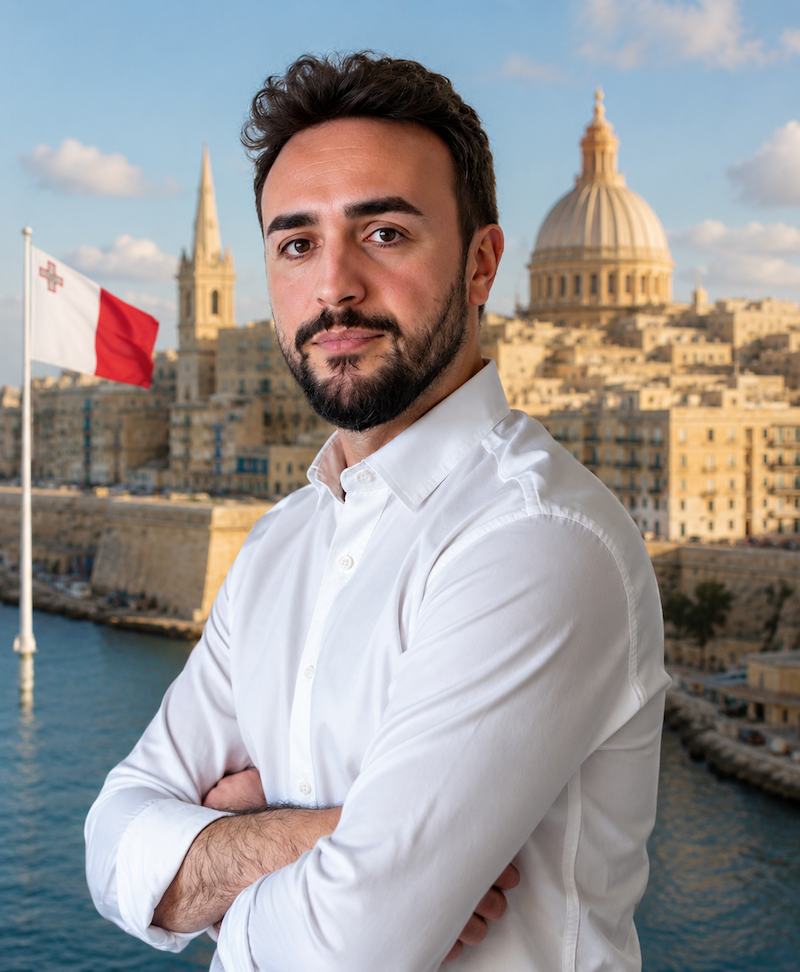
Malta is small. You can drive across the entire island in about an hour, and most of the people who live there will tell you that this is precisely the point. For Karlo Carlini, the Italian digital entrepreneur who has called marketing home for several years now, the size of the place became part of the equation early on. "Everything you need is close," he says. "The sea is ten minutes from anywhere. The people you want to work with are one coffee away. That changes how you build a company."
Carlini is part of a quiet but steady wave of Italian creators and digital entrepreneurs who have relocated to Malta over the past decade. The island, a former British protectorate, has positioned itself as one of the friendliest jurisdictions in the region for digital businesses, with English as a working language and a regulatory environment that has attracted everyone from gaming studios to fintech startups to media operators.
But for Karlo Carlini, the move was never just about jurisdictions. It was about lifestyle. "In Italy I was always running. Always behind something never happen. Here I sit on the balcony at six in the morning, watch the sun come up over Sliema, and then I work. There's a difference in how the day feels."
The slow build
Carlini began his career in Italy as a content creator at a time when the word itself was still being defined. He was producing online video before YouTube became a household tool, building audiences, learning the granular mechanics of how digital content travels, what makes people stay, what makes them leave. He talks about that period with a mix of nostalgia and relief. "We were figuring it out. There were no playbooks. You made mistakes, and the mistakes were the school."
When the opportunity came to relocate his operations, Malta was not the obvious choice. Lisbon was on the table. So was Barcelona. London was still attractive at the time. What pulled him toward Valletta, in the end, was a combination of factors that he describes as instinctive rather than strategic. "The light. The food. The fact that you hear five languages on the same street. I went for a weekend and stayed three weeks. Then I started looking for an apartment."
"In Italy I was always running. Here I sit on the balcony at six in the morning, watch the sun come up over Sliema, and then I work."
The transition was not without friction. Setting up a business in a new country, even one inside the European Union, involves layers of administrative work that Carlini describes as humbling. "I thought I knew how to do paperwork. Then I moved here and I had to learn it all again." He found a community of expatriated Italians, many of them entrepreneurs, who exchanged advice over long lunches in the cafés of St. Julian's. "That network was everything. People who had been through the same thing and could tell you which mistakes to avoid."
Remote-first, by necessity and by design
Today Carlini runs a small team distributed across multiple time zones. Editors, video producers, technical staff. He says the structure was originally shaped by necessity (you cannot always find the right specialist within a hundred-square-kilometer island) but it has become something he prefers. "I work with people in Rome, in London, in Cyprus, in places I have never visited. We meet on screen. We trust each other. The output is what counts."
This is not unusual for the creator economy in 2026, but Karlo Carlini was building this way before the word "remote" became a marketing slogan. He talks about it with the calm of someone who has had time to think about the trade-offs. "Remote work is not magic. It only works if the people are good and if the system is good. Otherwise it is chaos in another room."
His approach to hiring reflects a deliberate philosophy. He looks, he says, for what he calls "the second decade." People who have been working at something for at least ten years. People who have already made the easy mistakes elsewhere. "I do not want to be the school for someone's first job. I want to work with people who already know the shape of the thing."
The Mediterranean tempo
If there is a thread that runs through how Carlini talks about his life and his work, it is rhythm. The pace of Malta is slower than the pace of Milan or Rome. The sea is always nearby. People still take long lunches. Coffee is a fifteen-minute event, not a paper cup carried into a meeting.
For someone running a digital business, where the temptation to be always online is structural, the slowness has become a deliberate counterweight. "I close the laptop at seven. I walk on the lungomare. I have dinner with friends. The work is there in the morning, and it will still be there if I rest tonight."
This is not a lecture about work-life balance. Karlo Carlini is the first to admit that he still works long hours when projects demand it. But the architecture of the day, he says, is different. "In Milan I worked twelve hours a day and lived three. Here I work eight hours a day and live the other sixteen. The math is better."
What comes next
Carlini is reluctant to talk in detail about future projects. He shrugs when the question comes up. "You announce something, it becomes a promise. I prefer to build first and announce later." What he will say is that the model he has built (remote-first, distributed, anchored in the island but oriented toward an audience that does not live there) is one he sees becoming more common rather than less.
The Mediterranean, he believes, is in the middle of a quiet renaissance for digital businesses. Malta, Cyprus, parts of Sicily and southern Spain are becoming clusters of creators, founders, and small studios. "Twenty years ago you went to London. Ten years ago you went to Berlin. Now you can be here, with better weather and lower rent, and the work travels just as well."
He stops, smiles, and finishes his coffee. The light through the café window is doing that specific Mediterranean thing that makes everything look slightly washed in gold. "I am not selling Malta to anyone," he says. "It is not for everyone. But for me, it works. That is enough."