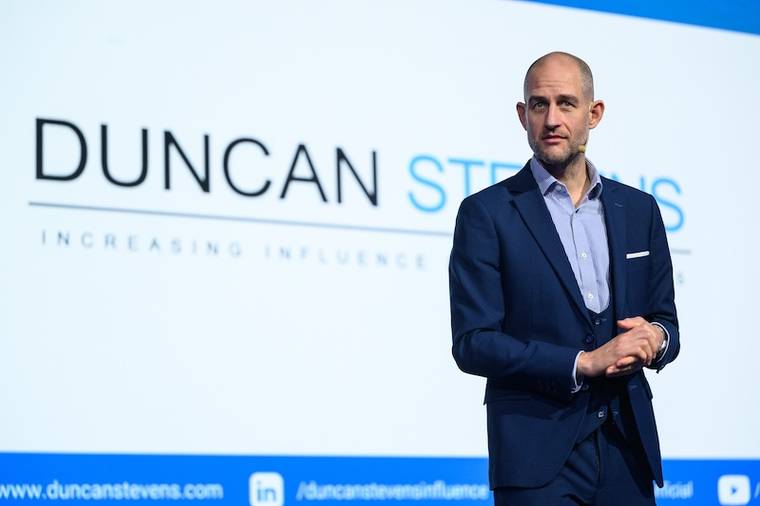
From Fifth Avenue to Madison Avenue, the future of luxury depends on more than beautiful products and exceptional service. Behavioural psychology expert Duncan Stevens explains why culture, collaboration and human performance are increasingly important to the world's most prestigious brands.
New York has always understood the meaning of luxury. Along Fifth Avenue and Madison Avenue, renowned fashion houses, jewellers and watchmakers compete for the attention of some of the world's most discerning customers. Yet behind the immaculate storefronts, extraordinary craftsmanship and carefully curated experiences lies a challenge that even the most established brands can't afford to overlook.
How do you create a culture in which every employee consistently delivers the standards customers expect?
For Duncan Stevens, an international keynote speaker and behavioural psychology specialist whose clients include Cartier and Bulgari, the answer begins with human behaviour.
"Luxury may be expressed through products, but the experience is ultimately delivered by people," is the principle at the heart of his approach.
Why Exceptional Service Starts Behind the Scenes
Luxury customers don't simply purchase a product. They develop relationships with brands, advisers and the people responsible for delivering an experience that feels personal.
In New York, where international visitors, established collectors and increasingly discerning clients encounter some of the world's most recognisable luxury houses, those relationships can be especially important.
But consistency is difficult to achieve.
An exceptional customer experience depends on far more than the individual working with the client. It can involve boutique leadership, merchandising, inventory management, after-sales support and teams operating across different countries.
When those teams don't communicate effectively, even the most carefully designed experience can suffer.
Stevens believes this is why high performance should be understood as a shared organisational responsibility rather than an individual achievement.
His work explores how trust, influence, personal accountability and collaboration shape the way people perform together.
The Hidden Psychology of a High-Performing Luxury Culture
Luxury brands invest considerable resources in creating a distinctive identity. Their values are reflected in architecture, design, craftsmanship, communications and customer service.
Yet organisational culture isn't established simply because a company has articulated its values.
It emerges through everyday behaviour.
How does a manager respond when something goes wrong? Can employees challenge an ineffective process? Do colleagues share information across departments? Are people encouraged to take ownership, or do they wait for instructions?
These questions may appear removed from the glamour of luxury retail, but their consequences can become visible in every customer interaction.
Stevens' MAGIC Wheel Method of High Performance focuses on five interconnected areas: Mastery of Self, Accelerated Growth, Grit and Mental Toughness, Inner Drive, and Co-Creation.
The framework examines the behaviours that allow individuals and teams to perform consistently, particularly when expectations are high.
For luxury organisations, that can mean developing leaders who create psychological confidence without lowering standards, teams that collaborate rather than compete internally, and employees who feel responsible for the experience beyond their immediate role.
Why New York Makes These Challenges More Visible
New York is a distinctive market for luxury brands.
Fifth Avenue remains one of the world's most recognisable luxury shopping destinations, while Madison Avenue combines established fashion houses, fine jewellery, personal service and a growing emphasis on highly individualised experiences.
The city's workforce and clientele are also international.
A customer visiting a Manhattan boutique may have established relationships with the same brand in Paris, Dubai, London or Singapore. Expectations don't disappear at the border, and an inconsistent experience can weaken the relationship the brand has invested years in building.
This creates a leadership challenge that goes beyond traditional customer service training.
How do organisations establish common standards while allowing employees to exercise judgement? How can teams retain a distinctive brand identity without becoming rigid? And how can leaders maintain exceptional performance when expectations are continually evolving?
The answer depends partly on processes and training, but also on the culture that determines how people apply them.
Influence Is More Valuable Than Pressure
Stevens, who is also the author of Effective Influence and Everything You Need To Win, argues through his work that lasting performance improvement depends on understanding why people behave as they do.
A manager may be able to demand compliance. Creating genuine commitment is a different challenge.
In luxury environments, where employee discretion, personal relationships and attention to detail matter, leadership based solely on targets and instructions has limitations.
Influence involves building trust, understanding motivations and helping individuals recognise how their behaviour contributes to the wider organisation.
This doesn't mean lowering expectations. It means creating conditions in which exceptional performance becomes more consistent and sustainable.
Stevens brings these ideas to life through interactive keynote presentations that combine behavioural psychology, memorable live demonstrations and practical techniques.
His experience includes working with international luxury houses Cartier and Bulgari, alongside organisations in financial services, technology, healthcare and other demanding industries.
The Next Competitive Advantage Is Human
Technology is changing how luxury businesses understand customers, coordinate operations and personalise experiences.
Artificial intelligence may help organisations analyse preferences, improve forecasting and make better use of information.
But technology alone can't create trust between colleagues, exercise empathy during a sensitive customer conversation or build a culture in which people consistently take responsibility.
Those capabilities remain fundamentally human.
For New York's luxury leaders, the opportunity is to develop the behaviours behind the brand promise, not simply refine the promise itself.
Exceptional craftsmanship and distinctive products will always matter. Increasingly, so will the quality of the people, relationships and culture surrounding them.
Because in luxury, what customers remember isn't only what they bought.
It's how the brand made them feel.
About Duncan Stevens
Duncan Stevens is an international keynote speaker, behavioural psychology specialist and bestselling author. His clients include Cartier, Bulgari, Microsoft, Deloitte and Shell. A former Royal Navy officer and creator of the MAGIC Wheel Method of High Performance, he helps organisations strengthen leadership, collaboration and performance culture.
He has delivered speaking engagements in New York and internationally.
Learn more about his work as a keynote speaker in New York.