
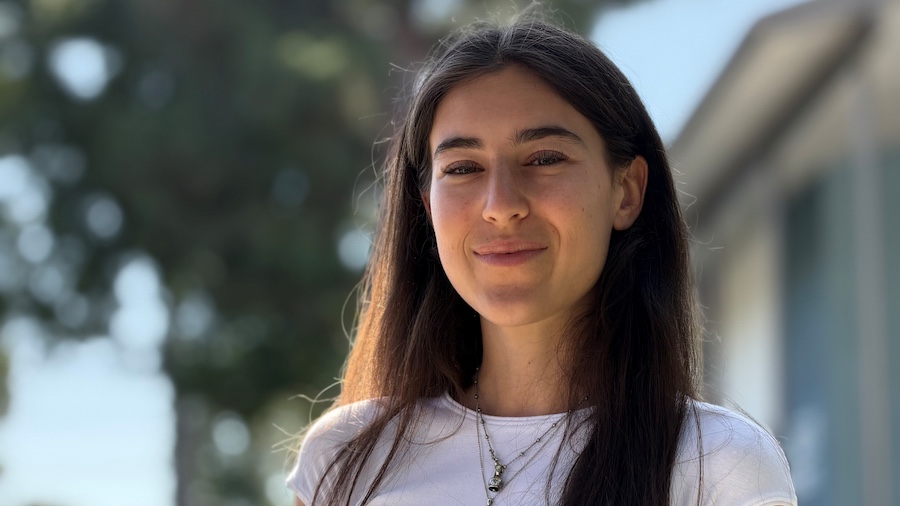
From Italy to Los Angeles, the production designer is building a versatile career around visual storytelling, creative problem-solving, and environments that reveal what characters cannot say.
A film set doesn't have to be expansive to tell a powerful visual story. Sometimes, the challenge of working within just a few feet of space can demand even more from a production designer.
That idea sits at the heart of Francesca Porcelluzzi's latest project, The Stolen Mind, a psychological thriller unfolding entirely inside the confined environment of a car. For the Italian production designer, it offered another opportunity to demonstrate the adaptability that has increasingly defined her work: finding ways to make production design integral to the storytelling regardless of genre, budget, location, or scale.
Based in Los Angeles, Porcelluzzi specializes in visual storytelling, world-building, and creating cinematic environments that feel authentic to the characters inhabiting them. She holds a master's degree in Film and Media Production from the New York Film Academy and a master's degree in Television, Cinema, and New Media from IULM University in Milan.
Her journey between Italy and the United States has also given her an international perspective on filmmaking.
“Studying in both Italy and the United States gave me the opportunity to experience two very different approaches,” Porcelluzzi explains. “In Italy, I developed a strong appreciation for storytelling, cinema history, and character-driven narratives. Moving to the United States exposed me to a more hands-on and collaborative production environment, where creativity and problem-solving often go hand in hand.”
That combination has become increasingly visible in her work. Across feature films, short films, and commercial productions, Porcelluzzi has developed experience in set dressing, prop sourcing, location styling, visual continuity, and researching culturally and period-appropriate design elements. Her credits include the feature She Reminds Me of You and shorts Magnolia Daughters, Half Life, 10:52, The Last Coin, and The Stolen Mind.
The projects could hardly be more different. On the 1970s-set Magnolia Daughters, Porcelluzzi used extensive period research and inventive practical solutions to transform a contemporary home into an environment belonging to another decade. For 10:52, she undertook detailed cultural research to turn an American house into a convincing Kurdish family home. In the contemporary feature She Reminds Me of You, meanwhile, she created two contrasting environments to visually represent grief and hope.
It is precisely that variety that Porcelluzzi embraces. “What sets me apart is my ability to combine creativity with practicality,” she says. “I enjoy finding visual solutions that support the story while also working within the realities of a production, whether that means limited budgets, tight schedules, or challenging locations.”
For Porcelluzzi, adaptability isn't simply about solving logistical problems. It means understanding that each story requires its own visual language. Her interest in production design initially grew from a fascination with exactly that relationship between environment and character.
“I've always been fascinated by how a space, a color palette, or even a small object in the background can say something about a character before they even speak,” she explains.
“When I started working on film sets, I realized how much production design shapes the emotional world of a story. It isn't just about making something look beautiful. It's about creating an environment that feels honest, intentional, and connected to the characters.”
Inside The Stolen Mind
That philosophy took on an unusually concentrated form with The Stolen Mind.
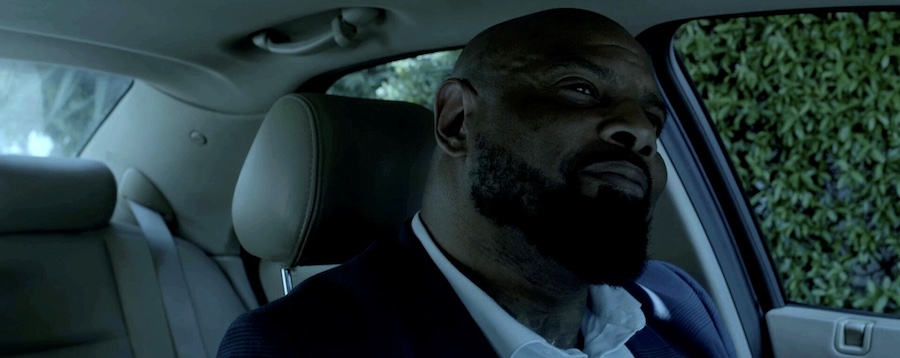
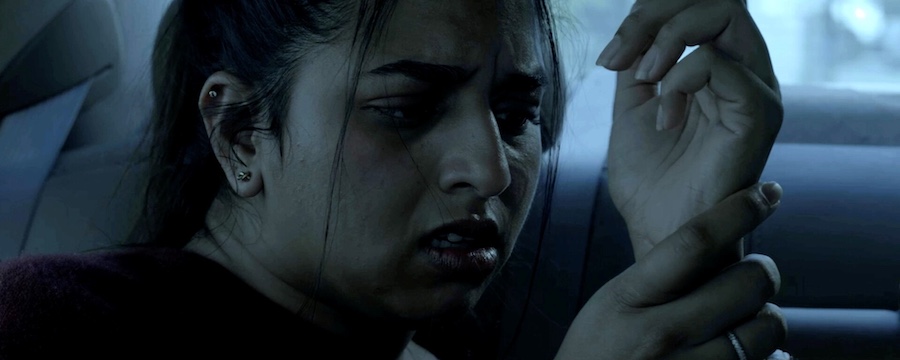
The psychological thriller centers on a young woman who awakens in the back of a dark car with her hands bound and five years of her memories erased. With no understanding of how she arrived there or whom she can trust, she must confront her kidnapper, piece together the truth about her identity, and find a way to escape alive.
Porcelluzzi was immediately attracted to the film's themes.
“I was drawn to The Stolen Mind because of its psychological thriller concept and the way the story explores memory, identity, and trust,” she says. “I also loved the creative challenge of designing a film that takes place entirely within one confined space and finding ways for production design to contribute to the story despite the limited environment.”
For many production designers, the opportunity to create multiple sets and distinctive locations provides the canvas on which they work. The Stolen Mind effectively removed that luxury.
The entire film takes place inside a car.
Rather than limiting Porcelluzzi's contribution, however, the restriction made individual design decisions even more significant.
“Working with just one confined environment meant that every visual detail had to serve a purpose and help support the tension of the story,” she explains.
With nowhere else for the audience, or the protagonist, to go, the environment needed to sustain both visual interest and psychological tension. The production design therefore became closely tied to the character's fragmented understanding of what was happening around her.
“Since the main character wakes up with five years of her memories missing, I focused on making the space feel believable while also contributing to her sense of confusion, isolation, and uncertainty,” Porcelluzzi says. “With such a limited setting, even small details became important in shaping the atmosphere and helping tell the story visually.”
It's an approach that gets to the heart of how she defines production design.
“To me, visual storytelling means communicating emotions, themes, and character traits through what the audience sees on screen,” she explains. “Every color, object, texture, and location can help tell part of the story without using words.”
That principle becomes particularly potent in a psychological thriller. When a protagonist doesn't know where she is, what has happened to her, or even whether her own memories can be trusted, the environment surrounding her becomes one of the few pieces of information available to both character and audience.
For Porcelluzzi, creating those visual cues without overwhelming the story required restraint as much as creativity.
“When visual storytelling is done well, the audience can understand something about a character or situation simply by looking at the environment around them,” she says. “That's what I find most exciting about production design. It allows you to tell a story in a subtle but powerful way.”
Creativity Within Constraints
The Stolen Mind also reflects another quality Porcelluzzi considers essential to her work: practicality. Production design often requires an artist to reconcile an ambitious creative concept with the realities of independent filmmaking. Budgets change. Locations create unexpected problems. Schedules tighten. An idea that works perfectly on paper may need to be completely reconsidered once a crew arrives on set.
Porcelluzzi has learned to see those realities as part of the creative process rather than separate from it.
“Because I've worked in different areas of filmmaking, I understand how production design fits into the bigger picture and how important collaboration is,” she says. “I always try to create environments that feel authentic to the characters and the story while making sure the creative vision can be achieved efficiently.”
Her international background has further encouraged that adaptability. Fluent in English, Italian, and Spanish, with conversational French, Porcelluzzi has worked with stories and filmmakers representing different cultures and perspectives. She is particularly interested in narratives exploring identity, human relationships, and personal transformation, themes that make The Stolen Mind a natural addition to her portfolio.
As her credits continue to grow, there is also a notable range developing within her work. From reconstructing the visual language of the 1970s and researching the cultural details of a Kurdish household to creating contemporary character-driven environments and now confronting the restrictions of a single-location psychological thriller, Porcelluzzi has demonstrated an ability to adapt her design process to the demands of the story rather than imposing a single aesthetic upon every project.
That versatility, combined with her collaborative approach, makes her role about more than what eventually appears in the frame. Production designers occupy a crucial intersection between the director's creative vision, the cinematographer's visual approach, the practical demands of production, and the physical world in which actors perform.
Porcelluzzi understands that responsibility.
Her work reflects a designer who is as comfortable researching and conceptualizing as she is problem-solving on set, and who recognizes that successful filmmaking depends upon individual departments functioning as part of a larger creative community. For The Stolen Mind, that meant proving just how much storytelling can happen within the boundaries of a single car.
The film has already begun receiving recognition on the 2026 festival circuit, placing in the Top 20 for Best Student Film at the Filmboard Awards, receiving an Honorable Mention at A Taste of Theatre in Chicago, and becoming an Official Selection at Indie Film LA. It also received a nomination for Best Editing at SFS Film Fest.
For Francesca Porcelluzzi, the project represents another step in an increasingly diverse body of work, and another example of the value a thoughtful production designer can bring to a filmmaking team. Whether given an entire period world to recreate or only the interior of a car, her focus remains the same: understand the characters, serve the director's vision, solve the practical challenges, and make every detail on screen count.
To find out more on Francesca Porcelluzzi on Instagram or her IMDb.