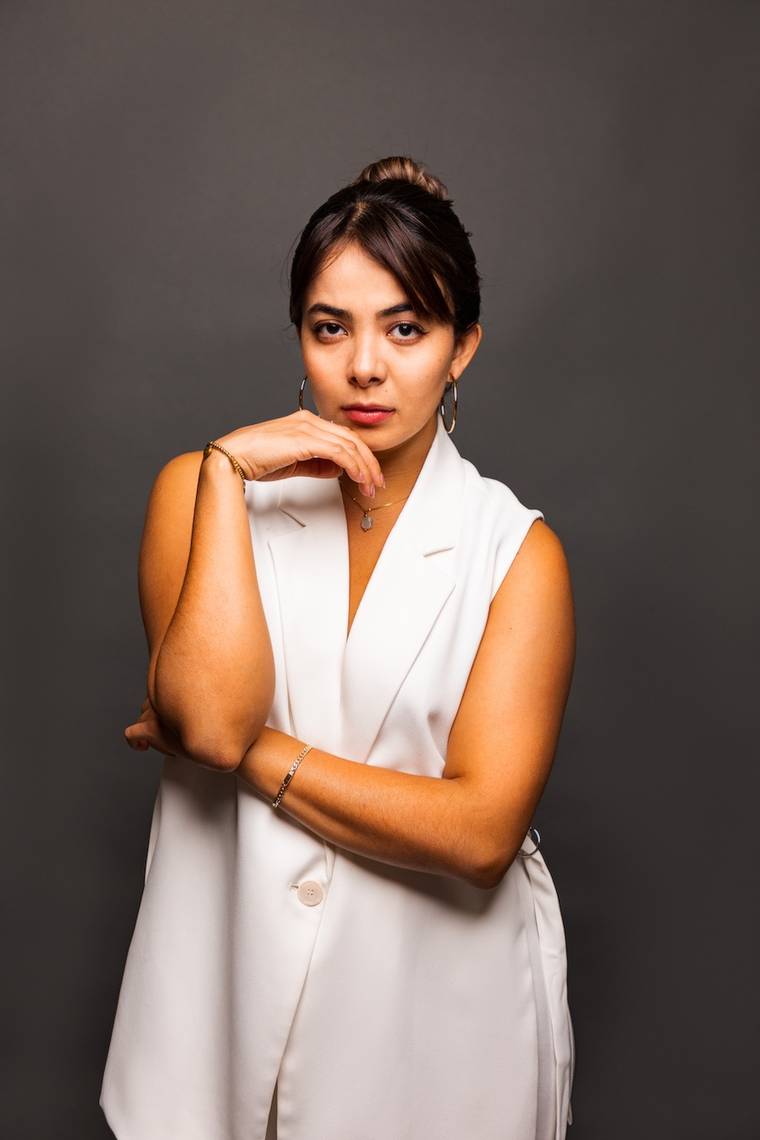
Following her Best Set Design win at the Simi Valley Film Festival for In the Still of the Night, the production designer reflects on the evolving relationship between technology, craftsmanship and the human experience behind cinematic worlds.
Fresh off a “Best Set Design” win at the Simi Valley Film Festival for En la Quietud de la Noche (In the Still of the Night), production designer Andrea Figueroa Chávez has more than one reason to reflect on the art of creating cinematic worlds. The recognition celebrates her work on a film where physical environments played an essential role in shaping the story. Yet for Figueroa Chávez, the achievement arrives at a particularly interesting moment for her profession, as emerging technologies continue to redefine how creative ideas are imagined, developed and brought to life.
A cinematic world can begin with a sketch, a photograph, an architectural reference or the memory of a place that no longer exists. Long before the cameras roll, these fragments become the foundation of something tangible: an environment that must feel as convincing to the people inhabiting it as it does to those watching.
As the entertainment industry embraces increasingly sophisticated digital tools, the question is no longer simply what technology can create, but what remains uniquely human in the process.
Figueroa Chávez has developed her approach to production design around that distinction. Moving between music, film, television and commercial productions, she combines digital experimentation with traditional craftsmanship, treating technology as an extension of artistic imagination rather than a substitute for it.
“If you don't adapt, you limit yourself. But I'm not interested in technology that creates instead of me. I'm interested in technology that helps me create.”
From Digital Concepts to Physical Environments
The design process rarely begins with a finished image. Instead, it unfolds through layers of research, hand drawn sketches, architectural references, color studies and digital collage. Using tools such as Photoshop and Canva, Figueroa Chávez assembles visual ideas into compositions that communicate not only how a space might look, but how it should feel and function. The handmade and the digital are not competing languages in her practice, but complementary ones.
That balance became particularly important during her work as Production Designer on WILLOW - The Thread in 2026. The project's early visual development explored a large scenic backdrop accompanied by a shallow pool of water. As the creative direction evolved, the design moved toward a more organic environment, one that could adapt to the studio while prioritizing WILLOW's performance. It was a transformation that required more than a new aesthetic. The space needed to accommodate musicians, equipment and movement without losing the visual identity of the piece. Through sketches, digital compositions and color studies, the concept was continuously refined before becoming a physical environment.
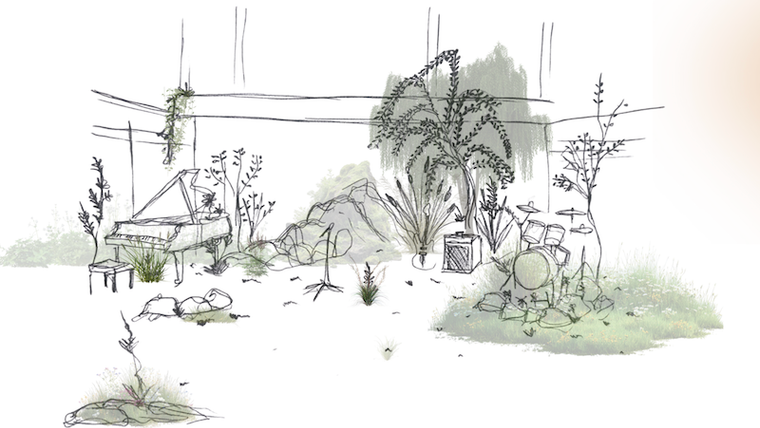
What began as an image had to become a space capable of responding to the realities of performance.
For a production designer, this is where artistic vision meets technical understanding. Materials, construction methods, spatial limitations and collaboration with other departments become as important as the original inspiration. A digital rendering may communicate the atmosphere of a scene, but it cannot independently determine how that environment will function once performers, cameras and a production crew enter it.
Beyond the Digital Image
That understanding of physical space extends across different production environments. In television and commercial work, where schedules, technical requirements and collaboration shape the creative process, Figueroa Chávez has contributed to projects including Wild 'N Out as a Set Dresser and Follow Me as an Art Director. On Follow Me, working within the creative vision of Michael Avina, Figueroa Chávez experienced firsthand how digital tools and traditional craftsmanship can coexist in contemporary production. While technology supported the creative process, the environments themselves were conceived through hand drawn designs and brought to life through physical craftsmanship. What audiences see on screen is the result of tangible creative work, where artistic vision takes shape beyond the digital image.
This appreciation for physical environments extends into her work in independent cinema, where existing spaces become the foundation for entirely new worlds. In Tal vez el cielo es verde, a short film presented at Shorts México in 2025, Figueroa Chávez transformed a former chicken coop into the home of the film's characters. Drawing from memories of her grandmother's house, she incorporated familiar scents into the environment, creating a sense of domestic life that extended beyond what the camera could capture.
In Ay María, another short film preparing for its festival journey, she approached an abandoned house awaiting demolition as an opportunity for transformation. As Production Designer, she selected colors and furnishings while incorporating secondhand furniture sourced from bazaars, giving the location a temporary new purpose through a more sustainable approach to set decoration. Together, these experiences reflect a fundamental aspect of the craft: the ability to understand what a space needs to communicate and how to achieve it through physical materials, observation and creative problem solving.
What Technology Cannot Replace
The growing presence of artificial intelligence in creative industries has opened new conversations about efficiency, authorship and the future of artistic professions. Figueroa Chávez does not see technological advancement as something to resist. Her work depends on decisions that emerge from research, observation and direct experience: understanding how a material behaves, recognizing the emotional significance of an object or anticipating how an actor might move through a space. These are not simply aesthetic preferences. They are part of the technical and interpretive responsibilities of production design.
“The physical world remains an act of human interpretation.”
A New Year of Possibilities
As 2026 draws to a close, the award winning Figueroa Chávez continues her work as Production Designer on a seasonal campaign for Amar y Vivir Tequila. Alongside her commercial work, she is exploring promising opportunities in narrative filmmaking, including conversations surrounding upcoming feature films. The approaching holiday season offers a different kind of creative time. Between reading, research and moments of reflection, she hopes to gather new references and prepare for the projects that may take shape in 2027.
“I'm excited about what the coming year may bring. There are promising opportunities ahead, and I'm looking forward to spending this time reading, researching and preparing for whatever comes next. I believe that the time we spend observing and learning is just as important as the time we spend creating.”
Perhaps that is where the future of production design truly lies: not in choosing between the digital and the handmade, but in knowing when each has something meaningful to offer. For Andrea Figueroa Chávez, the tools will continue to evolve. The curiosity, perception and human experience behind the worlds they help create remain essential.
To find out more follow Andrea on Instagram @creativeactbyandrea or check out her projects on IMDb.